
5G fronthaul network: O+RAN solution

5G fronthaul network: O+RAN solution
Business Background:
With the development of 5G network services and users, the construction of 5G networks has gradually accelerated, bringing more and more construction investment, and how to effectively reduce the cost and time of 5G network construction has become the primary problem of enterprise development and operation. At present, the average optical cable support of a single base station is 20,000 yuan/station, and operators need to invest billions of yuan in the construction of base station optical cables every year.
At present, PON networks and wireless network access optical cables are independently built, with different optical cable lines, and operators are also trying to use broadband + VPN to solve the access of micro-macro stations, but they can only solve the transmission and access of specific low-configuration stations, and the rate is unstable due to the fast-band breathing effect and cannot solve network security problems.
After years of optical network broadband construction by various operators, the optical network to the village rate has reached more than 95%, while in many provinces the mobile network to the village rate is less than 70%.
The rapid deployment of 5G base stations using the optical cable resources of broadband PON networks can effectively reduce construction investment, shorten the construction period, maximize the role of optical networks and 5G networks, realize the integration of fixed and mobile networks in the true sense, improve asset operation efficiency, greatly reduce investment, and improve efficiency, which is conducive to achieving the ambitious goal of becoming an information power.
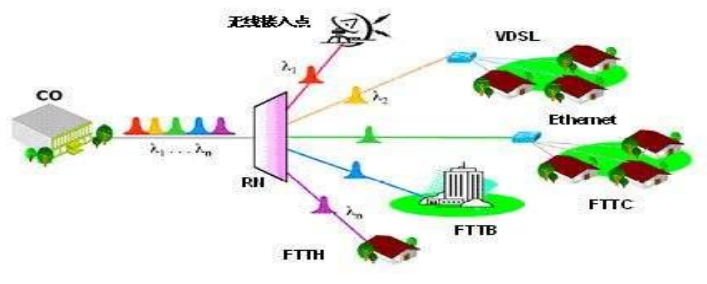
O+RAN Solution
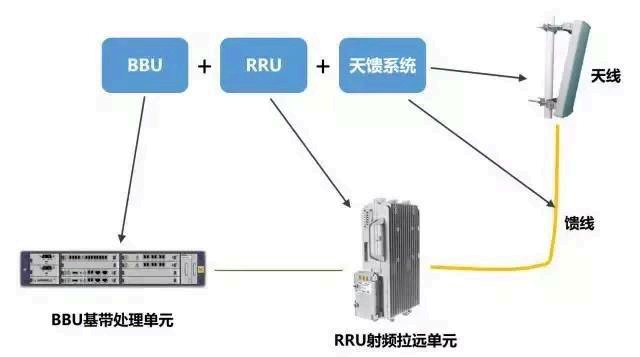
O-RAN RAN is Radio Access Network, which is the abbreviation of wireless access network, that is, the wireless access network composed of equipment base stations (BBUs), RRUs, and antennas above the ground in mobile communication systems.

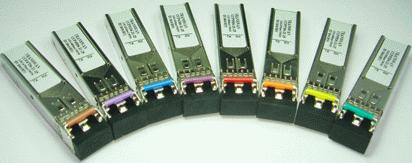
The optical modules provided by Hirundo and WDM passive modules are suitable for different types of 5G and 4G base station construction.
For the construction of 5G base stations
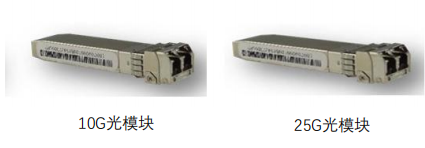
Provide 25G CWDM optical modules with different center wavelengths and 25G MWDM optical modules for 5G signal transmission.
For 4G base station construction
10G CWDM optical modules with different center wavelengths are used for 4G signal transmission.
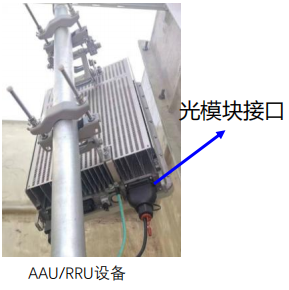

Solution advantages
- The solution can integrate base station transmission and access and CPRI access into the PON network so as to realize the sharing of optical fiber resources, and the rapid deployment of 5G base stations using the optical cable resources of the broadband PON network can effectively reduce the construction investment cost, shorten the construction period, maximize the role of the optical network and the 5G network, realize the integration of fixed and mobile networks in the true sense, improve the efficiency of asset operation, and greatly reduce investment so as to achieve the ambitious goal of becoming an information power.
2. The normal solution uses a 10G/25G DML laser + PIN receiver; the link budget is only about 12 dB, and the transmission distance can only reach up to 10 km. In order to achieve the design target, a high-power laser is used as the light-emitting device, and APD is used as the receiving device, which greatly improves the overall link budget, which can reach 20 dB, and improves the diversity and flexibility of the overall networking.
3. This scheme is compatible with GPON and XG-PON fixed network transmission: this application scenario first uses the characteristics of the PON network and wireless network to use optical signals without wavelength for transmission and uses a passive wavelength division module to combine and transmit two sets of signals at the signal transmitter end and then separates them at the receiving port to achieve the effect of signal merging and transmission without interference with each other.
4. Full integration of fixed and mobile and full use of broadband optical fiber resources to save billions of access cable investment every year, which will affect the future of operators' access network planning and construction.
5. Quickly and efficiently open the base station, without fiber hopping, and can realize the installation and opening of the base station on the same day;
6. It can be managed and controlled, and the corresponding OLT device, board, and port number can be checked by the broadband user number, and the end-to-end optical decay can be checked by the broadband system to determine whether it is consistent with the conditions for opening and combining.
7. Realize multiple access modes of CPRI interface and transmission interface, flexible networking, and wider adaptability;
8. Broadband optical fiber resources can be used to back up traditional base station access modes to improve the operation reliability of high-level base stations.